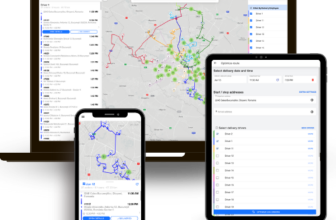
Running a local delivery operation is a daily balancing act. You juggle customer expectations, limited drivers, and tight margins. When orders rise suddenly, manual planning can create delays and confusion. A simple routing mindset helps you stay calm and consistent, even when the day starts with more requests than you expected.
Small businesses often succeed by being fast and personal. That advantage disappears if routes are messy or if drivers waste time crossing the same streets twice. Clear stop sequences, realistic time windows, and quick updates to the plan can protect your reputation. They also cut fuel use and reduce the risk of missed or late deliveries.
For restaurants and cloud kitchens that want reliable daily execution, food delivery software for small business can turn scattered orders into predictable routes. It helps you match driver capacity to demand and keep ETAs realistic. With better visibility, you can grow gradually without losing the neighborly service that made customers trust you in the first place.
Scaling service without losing control
Growth is exciting, but it can expose weak processes. What worked for ten deliveries a day may fail at fifty. The moment you add more drivers or expand your area, coordination becomes the real challenge. A consistent planning routine helps you prevent overload and keeps service quality steady as volume climbs.
A logistics route planner supports this transition by turning your daily workload into organized route options. You can account for capacity, shift length, and priority stops without guesswork. To keep improvements measurable, focus on:
- on-time rate per zone,
- miles per stop,
- driver workload balance.
Data matters more than intuition once you scale. You need to see which zones are profitable, where delays repeat, and how long stops truly take. When a dispatcher relies only on experience, the plan can break if that person is absent. A shared system reduces dependency on one brain and builds a reliable team habit.
Practical routing beyond food
Many companies discover that routing improvements do not belong to one industry. The same logic that helps meal delivery can also help maintenance teams, retail drop-offs, or scheduled pickups. When you understand how to reduce dead miles and group stops intelligently, you can apply the approach across different services with minimal changes. By using waste routing software, teams can build repeatable collection plans that adapt to real conditions.
Waste collection is a strong example of structured daily routing. Routes must respect access rules, street constraints, and volume variation across neighborhoods. Seasonal changes can also shift pickup intensity and require quick adjustments to planned sequences. When planning is inconsistent, you get missed pickups, angry calls, and overtime spikes. A stable routing system can smooth weekly patterns and make exceptions easier to manage.
With a structured routing approach, teams can see tangible operational gains, such as:
- better stop clustering
- fewer backtracking loops
- clearer exception handling
- improved weekly predictability
Managing people, not just maps
Technology is only as strong as the habits around it. Drivers need simple instructions and room to report real-world obstacles. Dispatchers need a way to update plans without creating confusion in the field. When feedback loops are short, the system learns faster and daily planning becomes less stressful for everyone involved.
Training does not have to be heavy. Short routines can keep performance steady. A five-minute pre-shift review of high-priority stops and access notes can prevent many delays. Clean data entry after each run also matters. If job notes are vague, tomorrow’s plan loses accuracy. Good routing culture is built in small daily actions.
To strengthen team alignment, set a simple rhythm. Review route results weekly, not only when something goes wrong. Recognize drivers who keep notes clear and follow the plan. Over time, this creates trust in the system. When people believe the plan is fair and realistic, adoption becomes natural instead of forced.
A sustainable path to growth
The best route strategy protects your brand as you expand. It helps you deliver more without burning out your team or raising costs unexpectedly. When you run a small operation, every late delivery feels personal. A structured approach reduces that risk and keeps your service experience consistent across new neighborhoods.
Start with one measurable improvement. Reduce average miles per route, shorten idle time, or tighten your delivery windows for a single zone. Once that works, expand the same logic to the rest of your map. This step-by-step approach keeps investments practical and helps you build confidence in the process.
In the long run, routing becomes a quiet advantage. Customers notice reliability more than they notice the tool behind it. Drivers appreciate balanced shifts. Leaders gain predictable costs and clearer capacity planning. With a smart foundation and steady refinement, your operation can grow without losing the speed and care that define a strong local business.