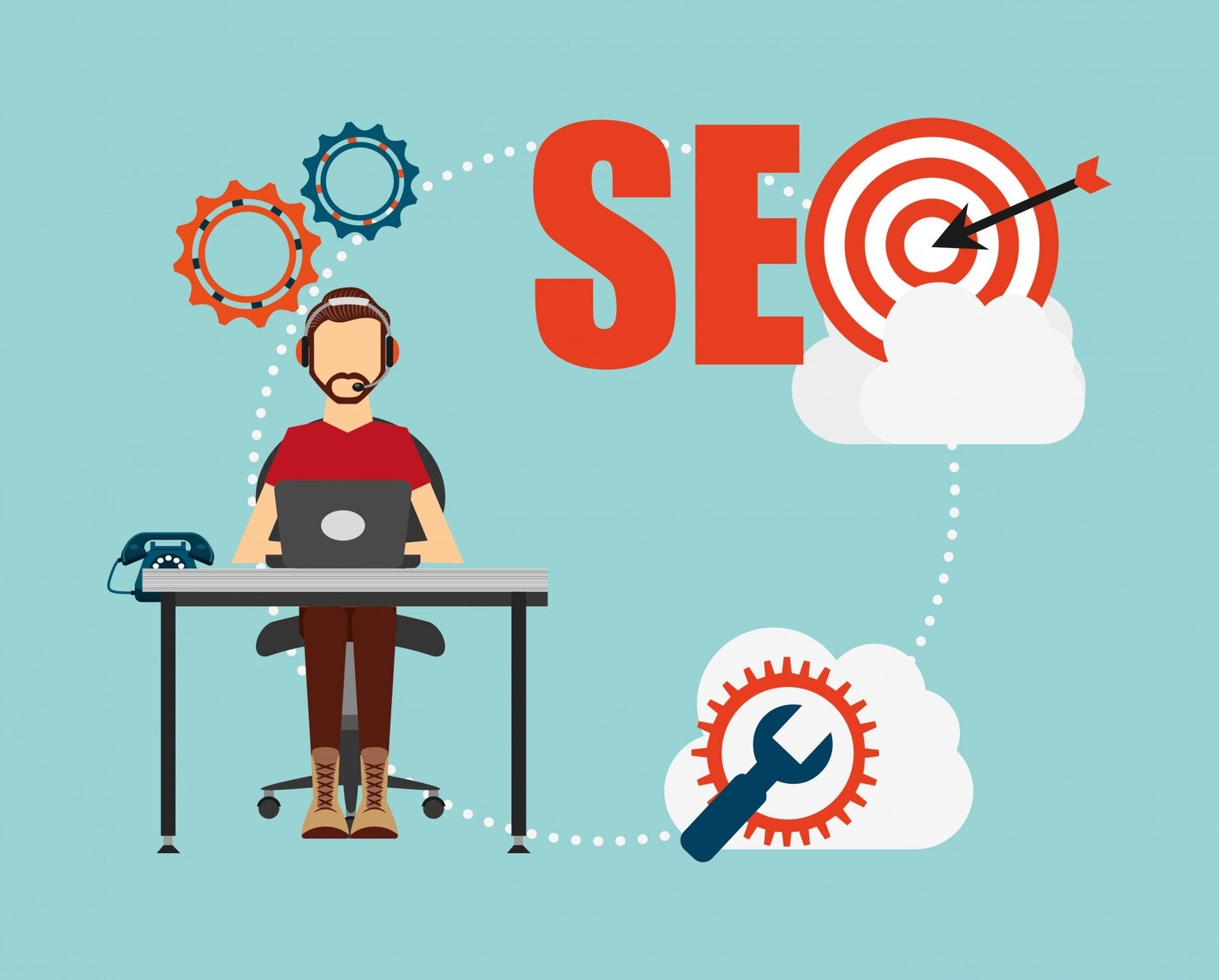
Search engine optimisation is changing as artificial intelligence transforms how people discover information, compare businesses and make purchasing decisions. Traditional search engines once focused primarily on displaying a list of website links. Today, AI-powered search experiences can understand questions, analyse information from multiple sources and generate direct answers to users.
This change introduces a new approach known as AI SEO (Artificial Intelligence Search Engine Optimisation). It combines traditional SEO techniques with strategies that help your website become more understandable, relevant and useful to AI-powered search systems.
If you want your business to remain competitive online, you need to understand how AI SEO works and how it influences your digital visibility. Whether you operate a local business, an eCommerce store or a professional service company, adapting your website to modern search behaviour can help you attract relevant visitors and build long-term online authority.
What Is AI SEO?
AI SEO is the process of improving your website’s visibility across traditional search engines and AI-powered search experiences. It uses artificial intelligence, machine learning, natural language processing and data analysis to understand search intent, improve content relevance and identify optimisation opportunities.
Unlike traditional SEO, which often focuses on matching keywords with search queries, AI SEO places greater emphasis on understanding the meaning behind questions and providing useful, contextually relevant information.
For example, someone searching for “best SEO services for a small business” may want more than a list of agencies. They might need information about pricing, local expertise, service options and expected results.
AI-powered search systems aim to understand these different requirements and present relevant information.
Your website should therefore provide clear answers, demonstrate subject knowledge and explain your services in a way that both people and search systems can understand.
How Does AI SEO Work?
AI SEO combines several optimisation techniques to improve how search systems interpret and evaluate your website. Understanding these processes helps you create a more effective search strategy.
1. Understanding Search Intent
Search intent describes the reason behind someone’s search query. A person looking for SEO information may want to learn something, compare service providers or hire an agency.
AI-powered systems use natural language processing to interpret these intentions rather than relying only on individual keywords.
To improve your content, identify what your audience actually wants to know. Create separate pages for informational searches, commercial comparisons and service-related searches.
For example, if you provide digital marketing services, your website could include educational blogs, detailed service pages and location-specific landing pages.
2. Analysing Content Relevance
AI systems evaluate how closely website information relates to a search topic. They can interpret relationships between words, concepts, questions and supporting information.
You should organise your content around clearly defined subjects instead of repeating the same keyword throughout a page.
Include related terminology, practical explanations, relevant examples and supporting details. This creates a stronger understanding of your topic and gives visitors more complete information.
3. Identifying Content Opportunities
AI-powered SEO tools can analyse search trends, competitor content, keyword gaps and website performance.
You can use these insights to identify questions your existing pages do not answer, topics your competitors overlook and opportunities to improve underperforming content.
However, automated recommendations should always be reviewed. Your experience, industry knowledge and understanding of customer needs should guide the final content strategy.
4. Improving Website Structure
A well-organised website helps visitors navigate information and allows search engines to understand the relationship between your pages.
Use descriptive headings, relevant internal links, logical navigation and clear page structures.
For example, your main SEO service page should connect naturally with relevant articles about technical SEO, local SEO, keyword research and content optimisation.
This creates a connected information structure rather than leaving important pages isolated.
Why Is AI SEO Important for Your Business?
AI-powered search is changing how customers research products and services. People increasingly use conversational queries and AI-generated summaries to explore topics before visiting individual websites.
If your website provides useful information and demonstrates expertise, you can improve your opportunities to reach potential customers through different search experiences.
Here are several reasons AI SEO deserves attention.
1. Helps You Reach More Relevant Audiences
AI SEO focuses on understanding what your audience needs rather than targeting keywords without considering their purpose.
When your pages answer specific questions, you have a better opportunity to attract visitors who are genuinely interested in your products or services.
Relevant traffic can support stronger engagement and create more opportunities for enquiries and conversions.
2. Improves Content Quality
AI tools can help you discover missing information, identify confusing sections and organise content more effectively.
You can use these insights to create detailed service pages, informative blogs and helpful FAQs.
However, publishing large volumes of automatically generated articles without original value is not a sustainable strategy. Your content should include accurate information, practical advice and meaningful insights.
3. Supports Better User Experiences
Modern SEO is closely connected with website usability.
Your visitors expect pages to load quickly, display correctly on mobile devices and provide straightforward navigation.
AI SEO encourages you to consider how people interact with your website and where improvements may be necessary.
A simple website structure, readable content and accessible navigation can make it easier for potential customers to find what they need.
4. Builds Brand Authority
Customers are more likely to trust businesses that provide reliable information and demonstrate industry knowledge.
Publishing useful resources, explaining your services clearly and maintaining accurate business information can strengthen your online reputation.
Consistent expertise also helps search systems understand what your business offers and which subjects your website covers.
AI SEO vs Traditional SEO: What Is the Difference?
Traditional SEO and AI SEO share the same fundamental objective: helping people discover relevant websites through search.
However, their approaches differ in several ways.
| Traditional SEO | AI SEO |
| Focuses heavily on keyword targeting | Places greater emphasis on search intent and context |
| Optimises pages for conventional search results | Considers traditional and AI-powered search experiences |
| Uses keyword research and backlink analysis | Combines SEO data with AI-assisted analysis |
| Targets specific search phrases | Addresses broader questions and related topics |
| Focuses on organic rankings and traffic | Also considers visibility in AI-generated answers |
| Uses structured content and metadata | Emphasises clear, connected and understandable information |
You should not treat AI SEO as a replacement for traditional SEO. Instead, combine both approaches to build a comprehensive optimisation strategy.
Google confirms that established SEO fundamentals remain important for AI Overviews and AI Mode. There is no guaranteed shortcut or separate technical trick that ensures inclusion in AI-generated search results.
Essential AI SEO Strategies to Improve Your Website Visibility
If you want to prepare your website for the future of search, focus on practical improvements that benefit your visitors and support search engine understanding.
1. Create Helpful, People-First Content
Your content should answer real questions and provide information that visitors can use.
Avoid publishing generic articles that repeat information already available on hundreds of websites.
Instead, share practical examples, explain industry challenges and provide solutions based on genuine knowledge.
For example, an article about local SEO should explain how to improve business listings, maintain consistent contact information, collect customer reviews and create useful location-specific pages.
Give readers enough information to understand the subject without adding unnecessary paragraphs.
2. Optimise for Conversational Search Queries
People increasingly search using complete questions rather than short keyword combinations.
You should consider the natural language your customers use when looking for your services.
For example, instead of targeting only “technical SEO services”, create content that also addresses questions such as:
- What does a technical SEO audit include?
- How can you improve website loading speed?
- Why are some website pages not indexed?
- How does technical SEO support organic visibility?
Answer these questions directly before providing additional explanations.
3. Implement Answer Engine Optimisation (AEO)
Answer Engine Optimisation focuses on making your website content easier to understand and use in answer-based search experiences.
You can strengthen your AEO strategy by:
- Writing clear answers to frequently asked questions.
- Using descriptive headings that reflect real search queries.
- Explaining technical subjects in simple language.
- Including relevant facts and supporting examples.
- Keeping important information easy to locate.
- Using appropriate structured data where applicable.
A well-written FAQ section can help visitors find specific information without reading an entire article.
4. Focus on Generative Engine Optimisation (GEO)
Generative Engine Optimisation aims to improve your brand and content visibility across generative AI search experiences.
Platforms that provide AI-generated answers may retrieve information from multiple sources before presenting a response.
To support your GEO strategy, publish original research, provide accurate explanations and maintain consistent business information across relevant platforms.
You should also build genuine industry authority through useful resources, relevant publications and trustworthy references.
Remember that GEO does not guarantee brand mentions or citations in AI-generated responses. Your focus should remain on creating information that deserves to be referenced.
5. Strengthen Your Local SEO Strategy
If you operate a business serving customers in a particular city or region, local SEO should remain an important part of your AI SEO strategy.
Start by maintaining an accurate Google Business Profile. Make sure your business name, address, phone number, website and operating hours are correct.
You should also:
- Target relevant location-based search terms.
- Create useful service-area pages.
- Encourage genuine customer reviews.
- Maintain consistent business information across directories.
- Include local examples and relevant service details.
- Add location information naturally to website content.
For example, if you provide SEO services in Delhi, create content that addresses the needs of businesses operating in Delhi rather than simply repeating the city name throughout your website.
Your location pages should explain your services, target audience and local relevance.
6. Improve Technical SEO
High-quality content needs a technically accessible website.
Review your website regularly to identify problems that could affect crawling, indexing and user experience.
Pay attention to:
- Website loading performance.
- Mobile responsiveness.
- Broken internal links.
- Duplicate or missing page titles.
- XML sitemap configuration.
- Robots.txt settings.
- Canonical URLs.
- Secure HTTPS connections.
- Appropriate structured data.
Use Google Search Console to monitor indexing issues and understand how your website performs in Google Search.
7. Use AI Tools for Smarter SEO Research
AI-powered tools can make SEO research more efficient by analysing large amounts of information and identifying patterns.
You can use them to generate keyword ideas, group related search queries, analyse competitors and discover content gaps.
They can also help you create article outlines, improve readability and organise website content.
However, never publish AI-generated information without checking its accuracy. Review statistics, industry claims, recommendations and business details before making content public.
Your expertise and editorial judgement should remain central to every SEO decision.
8. Build Topical Authority Through Internal Linking
Internal linking helps connect related pages and guides visitors towards additional information.
Instead of using generic anchor text such as “click here”, choose descriptive phrases that explain the destination page.
For example, if you are exploring professional optimisation solutions, you can learn more about Apex SEO Company and its comprehensive search engine optimisation services.
Use relevant internal links within blog posts, service pages and informational resources.
Make sure each link provides genuine value and connects naturally with the surrounding discussion.
How Can You Measure AI SEO Performance?
AI SEO requires ongoing monitoring because search behaviour, algorithms and website performance continue to change.
You should evaluate several indicators rather than relying exclusively on keyword rankings.
Organic search traffic: Monitor how many visitors discover your website through unpaid search results.
Search impressions and clicks: Use Google Search Console to understand how often your pages appear and how frequently users visit them.
Keyword performance: Track important keywords and observe changes in rankings over time.
Engagement and conversions: Evaluate whether visitors explore your website, submit enquiry forms, call your business or complete purchases.
AI search visibility: Monitor brand mentions and website citations in relevant AI search experiences where reporting tools or manual checks are available.
Technical performance: Review indexing, crawling, mobile usability and page experience issues.
Compare performance over consistent periods and use the findings to improve your strategy.
What Does the Future of Search Engine Optimisation Look Like?
The future of SEO will involve a combination of traditional search, conversational queries, AI-generated answers and personalised discovery experiences.
As these technologies develop, businesses will need to provide more than keyword-focused content.
You should concentrate on three important areas: trustworthy information, strong technical foundations and meaningful customer experiences.
Search systems will continue to evolve, but the value of useful content and a well-maintained website will remain important.
Businesses that understand their customers, explain their services clearly and consistently improve their online presence will be better prepared for changing search behaviour.
Why Choose Apex SEO Company for Your AI SEO Strategy?
Adapting to AI-powered search requires a clear understanding of traditional SEO, technical optimisation, content quality and changing customer behaviour.
Working with an experienced SEO partner can help you identify website weaknesses, prioritise opportunities and develop a strategy that supports your business goals.
Apex SEO Company offers SEO solutions that include keyword research, on-page optimisation, technical SEO, content development, local SEO and link building.
Whether you want to improve existing website performance or establish a stronger organic presence, a tailored strategy can help you focus on the areas that matter most.
You can explore professional SEO solutions through Apex SEO Company’s search engine optimisation and digital growth services and understand how a structured approach can support your online visibility.
If you are ready to improve your website’s search performance, Contact Us to discuss your SEO requirements and business growth objectives.
Frequently Asked Questions About AI SEO
1. What is AI SEO in simple terms?
AI SEO is the process of improving website visibility using artificial intelligence, search intent analysis, content optimisation and traditional SEO practices. It helps your website provide relevant information for both conventional search engines and AI-powered search experiences.
2. Is AI SEO replacing traditional SEO?
No. AI SEO builds on traditional SEO rather than replacing it. You still need quality content, relevant keywords, technical optimisation, useful backlinks and a well-structured website to support long-term organic visibility.
3. How can you optimise your website for AI search?
Create original, informative content, answer relevant questions, improve technical SEO, use descriptive headings and maintain accurate business information. Focus on providing useful information rather than relying on shortcuts or automated content generation.
4. What is the difference between AEO and GEO?
AEO focuses on making content suitable for answer-based search experiences, while GEO focuses on improving visibility in generative AI responses. Both approaches complement traditional SEO and emphasise useful, understandable information.
5. How long does AI SEO take to show results?
AI SEO does not have a fixed timeline. Results depend on your website’s current condition, industry competition, content quality and optimisation efforts. Consistent improvements and regular performance monitoring are important for sustainable growth.